
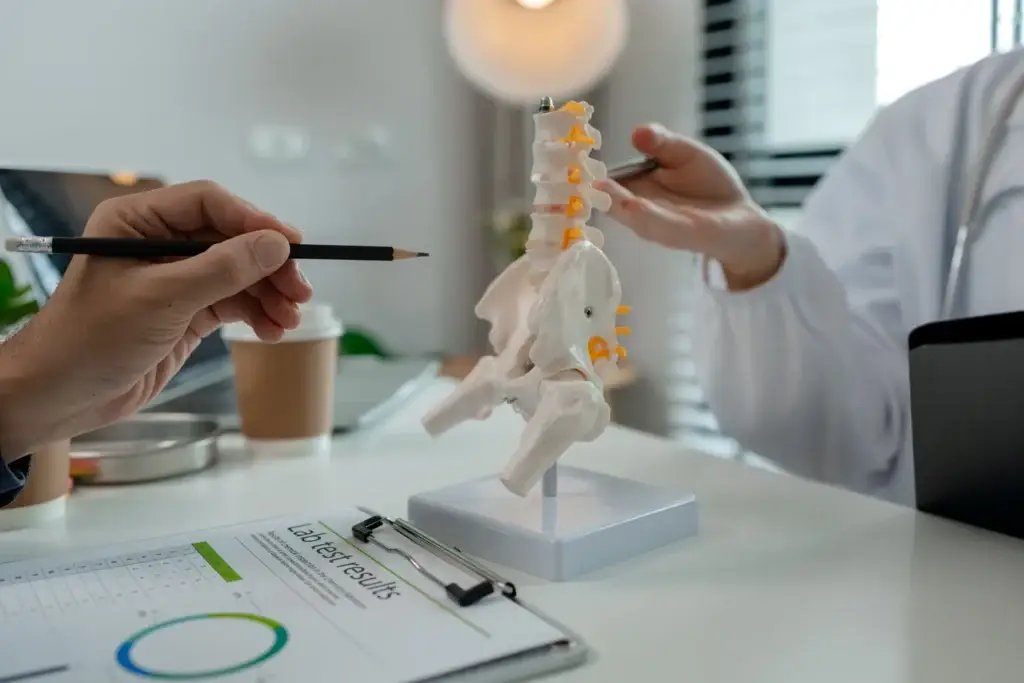
Minimally invasive spinal surgery may be an option for select patients with spinal conditions. A small incision may be appropriate for certain procedures. However, the decisive factor remains which treatment is best suited to your symptoms and medical findings. At the Spine Clinic Berlin, therefore, a thorough evaluation is conducted before a decision is made to proceed with surgery.
What is minimally invasive spinal surgery?
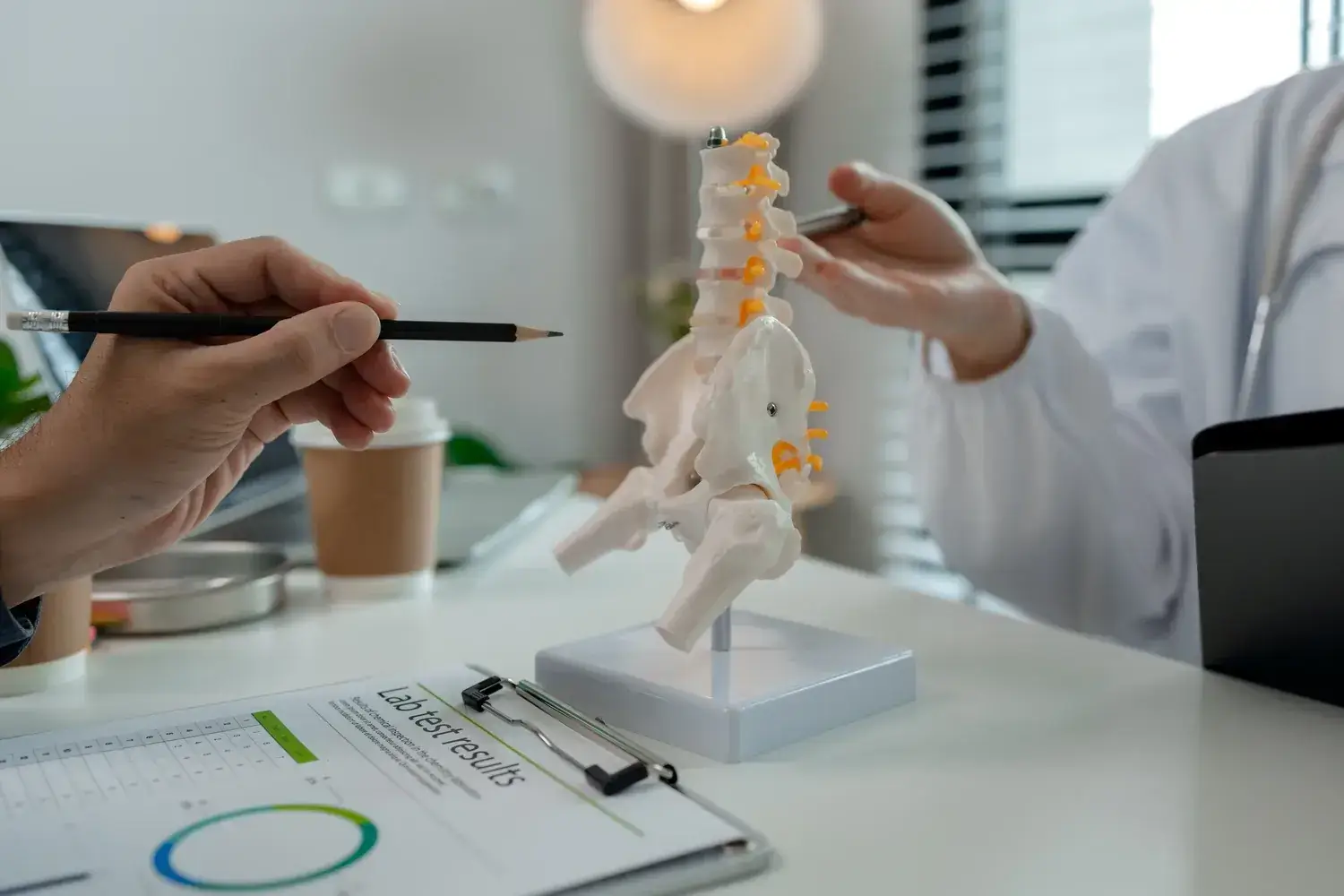
Minimally invasive procedures use limited access points to the surgical site. Depending on the procedure, a surgical microscope or an endoscopic camera is used. The goal is to reach the affected structures while causing as little trauma as possible to the surrounding tissue.
The name alone does not indicate how extensive a surgery is or what risks are involved. Even a procedure performed through a small incision can be challenging. The appropriate method depends on the condition, your anatomy, and the specific treatment goal.
When are minimally invasive spinal surgeries an option?
In certain cases of a herniated disc or spinal stenosis, surgical decompression of the nerves may be considered. For this to be an option, the patient’s symptoms, physical examination, and imaging findings must all be consistent.
The duration and severity of the symptoms, as well as previous treatments, also play a role. Non-surgical options are often considered first. However, in cases of certain neurological deficits, prompt treatment may be necessary.
An abnormal MRI result alone is not grounds for surgery. Similarly, a long-standing symptom does not automatically mean that surgery is necessary.
What treatments can relieve pressure on the nerves?
During microsurgery, a surgical microscope magnifies the view of the surgical site. In endoscopic procedures, a camera inside the endoscope provides the image. Specialized instruments allow treatment to be performed through a limited access point. However, small incisions alone do not determine the quality of a surgical method.
In the case of a herniated disc, part of the disc may press on a nerve root. The goal of potential surgery is to remove the compressing disc tissue and relieve pressure on the nerve. Not every change in a disc causes pain. Therefore, before surgery, we carefully assess whether the herniated disc explains your symptoms.
If the spinal canal is narrowed, decompression may be considered. Decompression means relieving pressure: portions of bone or ligaments that are putting pressure on nerves are surgically removed. The choice of procedure depends on which structures are affected and how the stability of the spine can be maintained.
Understand first, then treat

During the consultation, we will discuss how your symptoms developed and how they affect your daily life. The evaluation includes a physical examination, an assessment of existing findings, and, if necessary, additional tests.
Next, we’ll discuss the treatment options: What can be tried without surgery? What could a surgical procedure achieve? What symptoms might persist? And what are the arguments for or against a particular approach?
You can find an overview of the treatment options on our therapy page.
Have you already been advised to have surgery and would like to better understand the decision? Ask for a second opinion.
Benefits, Limitations, and Risks of Treatment
Depending on the procedure, a minimally invasive approach may put less strain on the surrounding tissue. However, this does not guarantee less pain, a shorter rehabilitation period, or better treatment outcomes.
Possible risks include bleeding, infections, damage to nerves or nerve sheaths, and persistent or recurring symptoms. Additional procedures may also be necessary. The personalized consultation will take into account the planned procedure and your health status.
When is another treatment the better option?
Patients with back pain do not automatically need spinal surgery. Depending on the cause, exercise, physical therapy, and a tailored pain management plan may be among the conservative treatment options. The most appropriate treatment depends on the condition and your limitations.
Even in cases of a herniated disc, non-surgical treatment may be an option initially. It is important for patients to understand the benefits and limitations of each option. In certain cases involving instability or severe misalignment, however, stabilization may be necessary. This is a different matter than simply removing disc tissue.
Contraindications are medical reasons that make a particular method unsuitable. They may result from test findings, previous surgeries, or comorbidities. Based on these factors, the treating physicians will work with you to determine whether an endoscope or another approach is appropriate.
Preparation and Postoperative Care

Before a scheduled procedure, factors such as pre-existing conditions, medications, and anesthesia are taken into account. Please do not change your medication without first consulting your doctor.
After surgery, your recovery will depend on the procedure and how you heal. You will receive personalized instructions regarding exercise, wound care, physical activity, and follow-up appointments. There is no one-size-fits-all timeline for hospital stays, returning to work, or resuming sports.
Frequently Asked Questions
Is “minimally invasive” the same as “endoscopic”?
No. Endoscopic procedures are among the possible techniques. Other procedures involving limited access can also be described as minimally invasive.
Is minimally invasive surgery always the better choice?
No. The key factor is whether this approach is an appropriate way to achieve the treatment goal. For some findings, a different approach makes more sense.
Can the surgery be performed on an outpatient basis?
That depends on the procedure, your underlying medical conditions, and the necessary monitoring. The details will be discussed with you individually in advance.
When can I go back to work?
This depends on the surgery, the healing process, and your work demands. You should discuss the best time with your treatment team.
If you experience new-onset paralysis, numbness in the groin area, or sudden problems with bladder or bowel function, you need immediate medical attention. Do not wait for a scheduled appointment.
Your next step
Making a good decision requires a clear explanation of your diagnosis. Under the direction of Prof. Dr. med. Michael Akbar, the Wirbelsäulen-Clinic Berlin provides a personal point of contact for questions regarding spinal conditions and possible treatments.


